MECHANISM
One key, one typebar
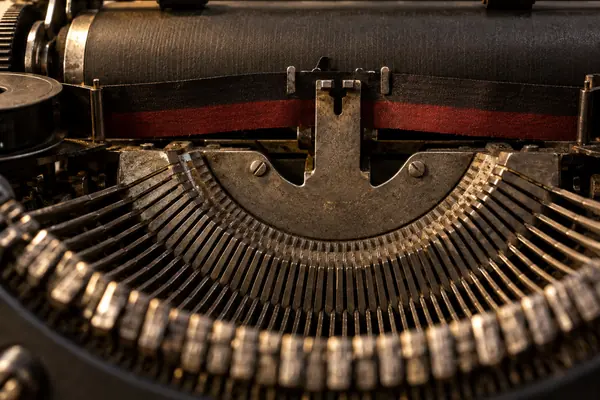
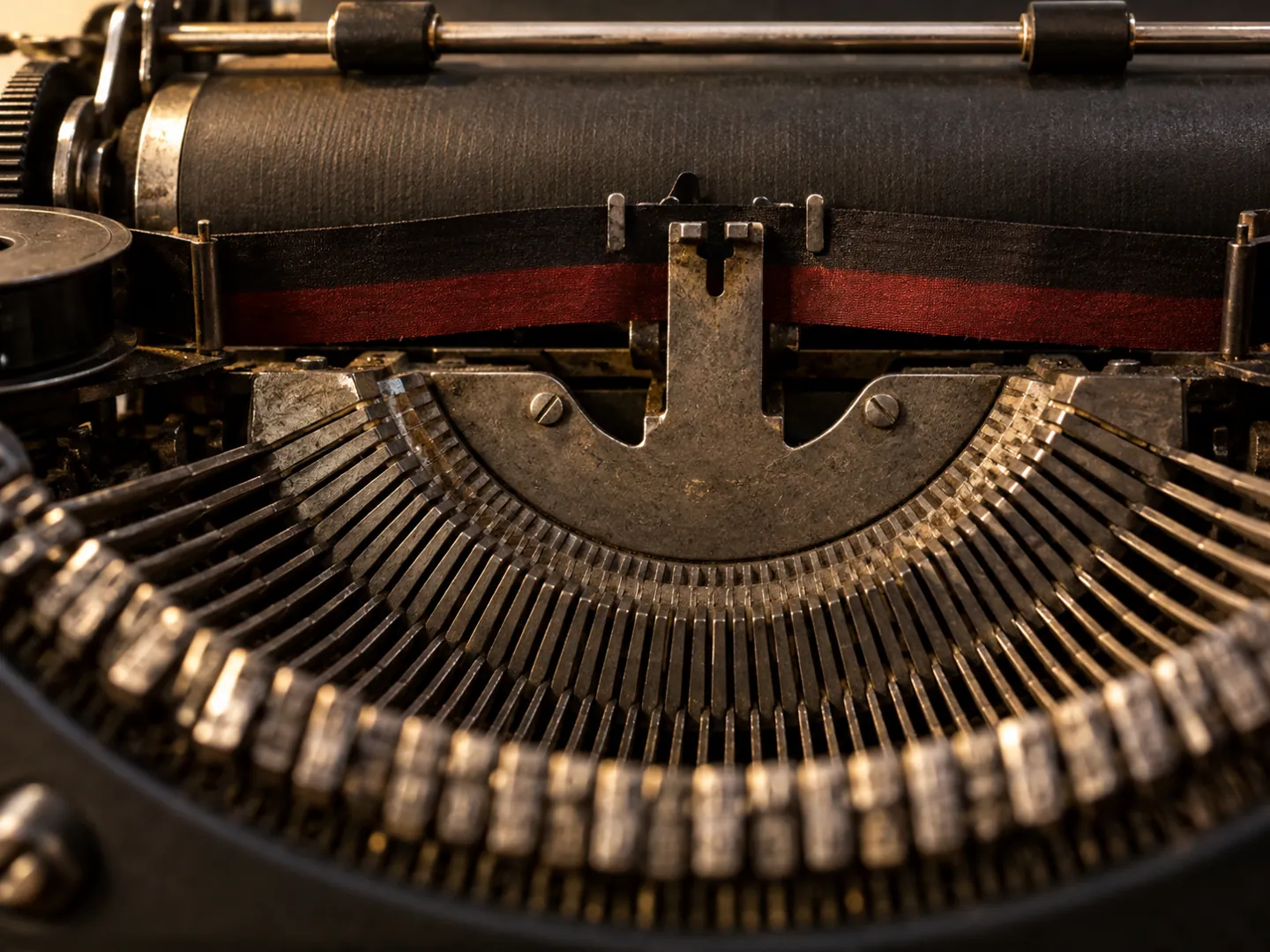
Each key is linked to a typebar carrying letters. The bars sit together in the typebasket and swing up to strike an inked ribbon against the paper on the platen.
Follow a keystroke doodletyper
INSIDE THE MACHINE
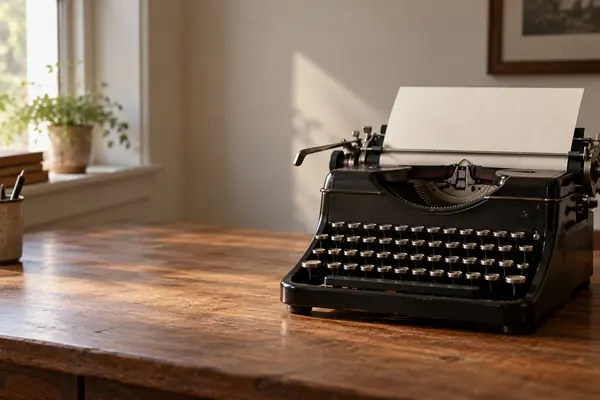
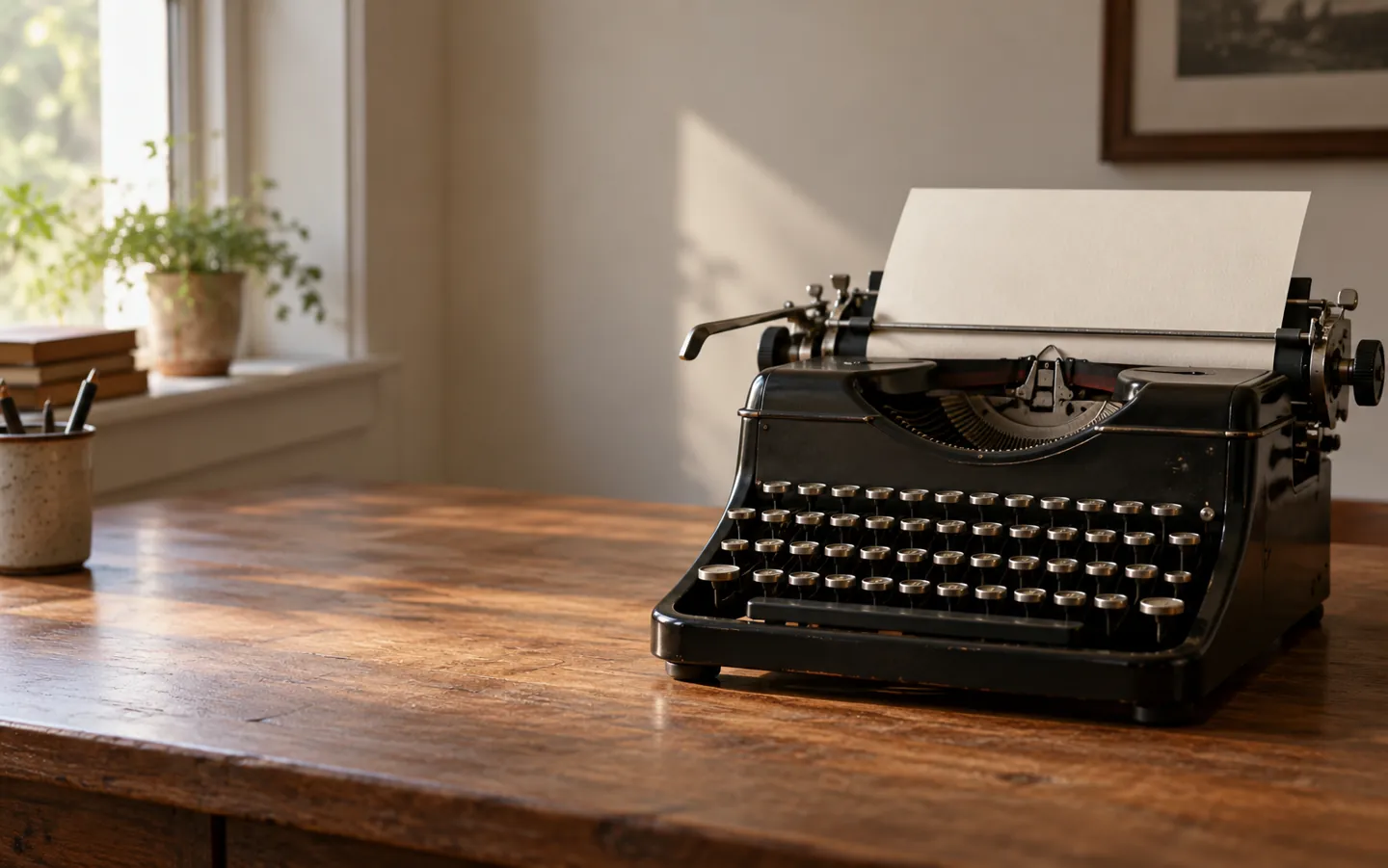
A manual typewriter is a small machine for every letter.
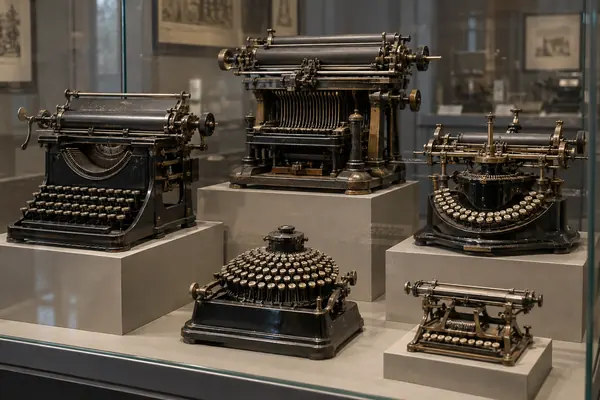
Press a key and a lever swings a typebar up through an inked ribbon onto the paper, then a spring nudges the carriage one step. Museums hold the designs that tried other ways, from a writing ball to a pointer and dial.
TAP step, return
Meet the machinesTHE SHORT ANSWER
The parts are simple.
Getting them to agree took decades.
MECHANISM
Each key is linked to a typebar carrying letters. The bars sit together in the typebasket and swing up to strike an inked ribbon against the paper on the platen.
Follow a keystrokeSEEING THE PAGE
The Science Museum calls the 1897 Underwood 1 the first typewriter with a writing area facing the user and typebars hidden until struck, a layout every later typewriter shared.
Meet the machinesOTHER WAYS
Before the standard design won, inventors tried keys on a sphere, a pointer and a few keys, and fans of six keys for braille.
The braille writer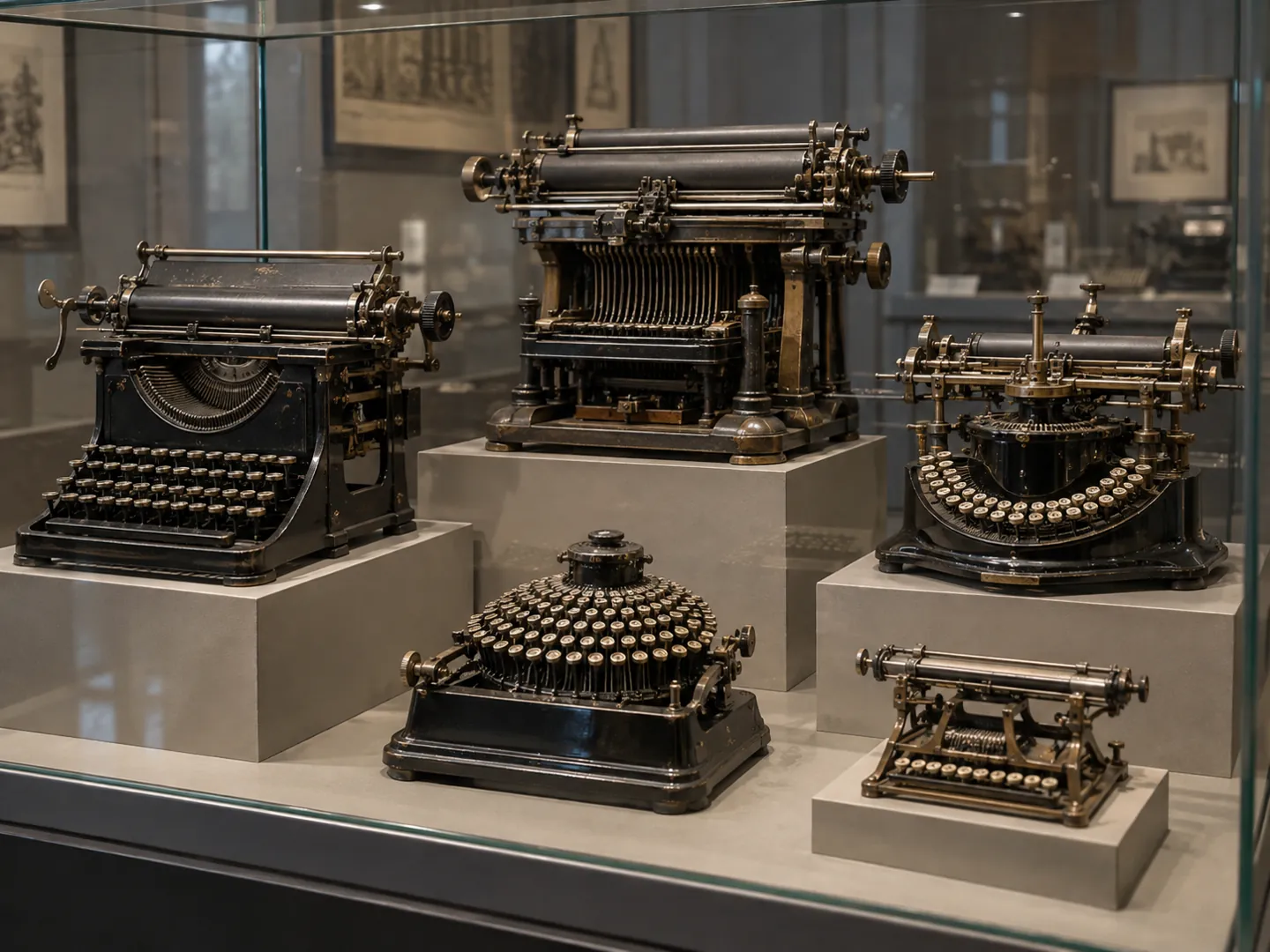
ONE KEYSTROKE, FOUR MOVES
A manual typewriter can have hundreds to thousands of moving parts, but a single letter only needs four of its jobs.
The key lever swings its typebar up out of the typebasket towards the printing point.
Ribbon guides lift the inked ribbon between the typeface and the paper, then lower it again.
The rubber-covered platen stops the typeface but lets enough force reach the paper to print the letter.
A mainspring moves the carriage one precise step; at the end of a line the return lever turns the platen and pushes the carriage back.
TWO NUMBERS WORTH KNOWING
One clever trick from 1878,
one speed from a machine with no keyboard.
2×
Characters from the same typebars
Giving each typeface an upper and lower case form, and a shift key to raise and lower the typebars, produced twice as many characters without adding typebars.
THE SHIFT KEY · 1878
100+ a minute
Speed with a pointer and dial
The Science Museum says an operator could reach at least 100 strokes a minute on its pointer-and-index machine after minor practice.
INDEX TYPEWRITER · c. 1905
Standard desk typewriters weighed 15 to 25 lb (5.6 to 9.3 kg), which is why they stayed on a desk or typing table; portables were made lighter for home and school.
MEET THE MACHINES
Pick a machine from the Science Museum Group collection. The bar shows how close it came to the layout that every later typewriter shared.
Dates and descriptions from the Science Museum Group collection and the How Products Are Made reference series.
TYPING BY TOUCH
The Science Museum's braille typewriter was invented in 1899 by a German teacher of blind and partially sighted pupils. Its six keys match the six dots of a braille cell and are pressed at the same time, with metal dots on each wooden key showing its position.
Braille itself uses raised dots in a six-dot cell for each letter, punctuation mark and symbol, read with the hands from left to right. The museum notes it was adopted in France and England only in the late 1800s, after its inventor's death in 1852.
Questions
A metal arm linked to a key that carries the typeface. When you press the key, the typebar swings up and strikes the ribbon against the paper. All the typebars together form the typebasket.
The platen is a rubber-covered steel cylinder. It holds the paper and absorbs the impact of the typeface while letting enough force through to print.
A device that lets the carriage move in one direction only, in precise steps. A mainspring moves the carriage one step after each character.
The first Sholes and Glidden machines sold by Remington printed only capitals. A model made in 1878 used a shift key to raise and lower the typebars, doubling the characters.
The Science Museum says the 1897 Underwood 1 was the first typewriter with a writing area facing the user and typebars that stay out of sight until a key is struck, which made it easy to read and correct work as you went.
Updated
ABOUT THIS NAME
doodletyper.com is part of the DoodleSale portfolio. It isn't in an auction right now, but you can ask about leasing it.